
CORPORATE | 12.01.2025
Promoting the future of mobility


Transformation is a constant in our lives and technology keeps advancing, redefining everything, including mobility. In this context, MAPFRE remains at the forefront as part of its commitment to safety, sustainability, and innovation. A key piece in this jigsaw is its Road Safety and Experimentation Center (CESVIMAP), which is a reference laboratory for studying and responding to the major challenges in this field.

In 1983, CESVIMAP was founded with a dual objective: to improve road safety and to increase the efficiency of vehicle repairs. What started as a technical research center, dedicated to analyzing claims and repairing vehicles, has evolved into a leading institution in the study of new technologies applied to mobility.
This center now generates knowledge and transforms it into real solutions for the benefit of policyholders and professionals in the sector. And it does so thanks to its great capacity to integrate scientific analysis, technical knowledge, and practical vocation towards service.
The mobility of tomorrow
CESVIMAP is a test center for what is yet to come and for what we will lead in the future. Its facilities are equipped with specialist laboratories where the latest innovations in the automotive sector are analyzed.
Everything has a place: from advanced driving assistance systems to the latest safety developments for hybrid and electric vehicles, including a wide range of related technical implications.
However, if there is one thing that truly defines CESVIMAP, it is its practical approach. Not only is the theory of vehicles studied: they are tested, disassembled, subject to impact analyses, traffic accident reconstructions are performed, materials and components are verified and repair times and costs are examined.
New challenges
The popularity of electric vehicles has had a major impact, transforming travel and the approach to safety, maintenance, and repairs. The lines of research have had to adapt to this new reality, and aspects such as the protection of batteries in case of an accident, the behavior of the new materials used in the bodywork, or best practices when repairs are needed are being analyzed.
To this end, they collaborate in imparting training to professionals specializing in this field. Claims specialists, appraisers, and repair shop technicians, as well as others, are receiving specific lessons on how to react in the presence of an electric vehicle. This is a factor that clearly affects response times and, of course, safety.
Another challenge that is being considered is autonomous driving, a reality that is no longer so far fetched. In 2022, CESVIMAP conducted the first real trip of an autonomous model and today continues to analyze the operation and reliability of these driving systems, the new ways of understanding insurance, and the impact on road safety.
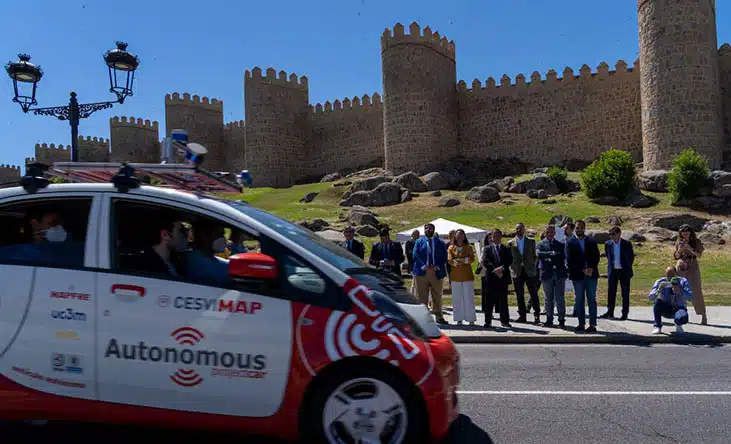
Thanks to the experience acquired, the center is in an excellent position to evaluate the behavior of certain technologies, such as lane keeping assist, adaptive cruise control, or automatic braking. This makes it possible to establish, for example, how a paint repair influences the correct functioning of a sensor or what happens if a camera comes out of alignment after a minor impact.
Beyond the workshop
Another of the pillars that support CESVIMAP is sustainability. The center actively works on the responsible management of vehicles when they reach the end of their useful life. In addition, it seeks to promote the circular economy in the automotive sector through CESVIrecambios, its Authorized Treatment Center (ATC), launched in 2004.
There, materials, parts, and components are recovered and reused, facilitating the reduction of waste and the efficient use of resources. At the same time, the use of more sustainable repair techniques is promoted, which minimize the environmental impact without compromising service quality and safety.
All this knowledge does not stay merely within its walls: it is transferred to the entire industry. It is shared with automotive manufacturers, training centers, workshops, public administrations, and even international organizations. The objective is that everyone benefits from the research carried out by CESVIMAP. It is specifically their vocation for collaboration that places this center in a position of global prestige.
In its more than 40 years of activity, it has created other centers with its same philosophy: Cesvi Argentina, Cesvi México, Cesvi France, and Cesvi Colombia. In addition, it is a member of RCAR(Research Council for Automobile Repairs), an international entity that promotes improvements in vehicle repair, and is a Global Innovation Partner of IBIS Worldwide, collaborating in international conferences on the automotive industry.
Our commitment to safety
But that’s not all: its activities directly impact the services that MAPFRE provides to our auto policyholders. Because thanks to the knowledge generated there, we can constantly renew and make our products and services more attractive, adapting policies and streamlining appraisals and repairs. Ultimately, improving the customer experience by anticipating the challenges of the future and adapting to the real needs of drivers.
We are aware that mobility is constantly evolving, unstoppable, in step with technology. But for us there is something that remains unbreakable: our commitment to safety. With this in mind, we will continue to investigate and prepare for the challenges of the future, relying on the support of this center, which is already an international benchmark.
RELATED ARTICLES:

SUSTAINABILITY | 07.03.2025Micromobility, the small (and sustainable) sister in urban transportation Mobility represents one of the greatest challenges and opportunities in the...

INSURANCE | 07.01.2025Insurance for new urban mobilityElectric scooters, shared bicycles, carsharing services, autonomous vehicles, etc. The current landscape of mobility in...
SUSTAINABILITY | 09.16.2024Sustainable mobility, a path without footprintRising to the challenge of sustainable transport is essential in the fight against climate change. Efforts to transition to a model that significantly reduces emissions are multiplying in an...